
uPVC windows built for
North Bengal's weather
Sapphire designs, manufactures, and installs premium uPVC windows across Siliguri, North Bengal, Sikkim, the northeast states, and Bhutan. We build for the climate you actually live in — monsoons, humidity, summer heat, street noise — and you feel the difference within weeks. Three things happen: rooms stay cooler in summer, nights become quieter, and your electricity bills drop. Every window is manufactured at our own Jalpaiguri factory, fitted with precision, and backed by a 20-year warranty on profiles and joints.
What is uPVC — and why it suits homes here
uPVC stands for unplasticised polyvinyl chloride. That’s a rigid plastic engineered to resist weather, moisture, and UV damage — nothing like the flexible PVC of pipes or garden hose. Think of it as material that combines the thermal insulation of timber with the durability of modern composites, minus the maintenance headaches.
In North Bengal and Sikkim, that matters. Your monsoon brings relentless rain and 80%+ humidity for months. Wooden frames swell, rot, and need repainting every few years. Aluminium conducts heat and cold straight into your home, causing condensation and mildew. uPVC doesn’t swell, rot, rust, or corrode — it shrugs off humidity, salt air, and seasonal temperature swings. Paint it once during manufacturing, and it stays that colour for decades with nothing but a rinse from a hose.
Add multi-chamber profiles (hollow sections inside the frame that trap air) and energy-efficient glass, and you get rooms that stay 5–7°C cooler in summer, quieter year-round, and less work for your AC and heater.
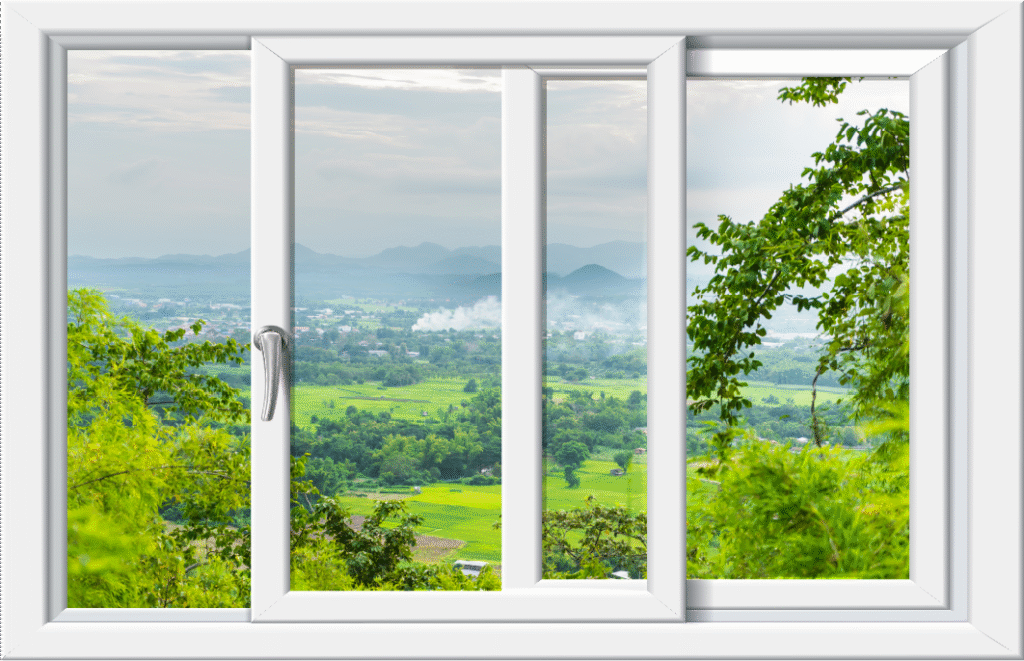
Why uPVC matters here
No rot, rust, or repainting — even in monsoon
5–7°C cooler in summer with insulated glass
20-year warranty on materials and joints
Usually one visit to fit — minimal disruption
Types of uPVC windows we make
We design each style for different rooms and needs. All link to detailed specs and installation photos on their product pages.
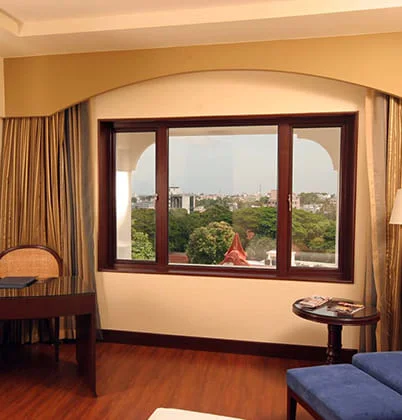
uPVC Casement Windows
Opens like a door on hinges, giving the best seal and the most control over ventilation. Architects favour them for living rooms and bedrooms because they combine clean lines with solid weatherproofing.
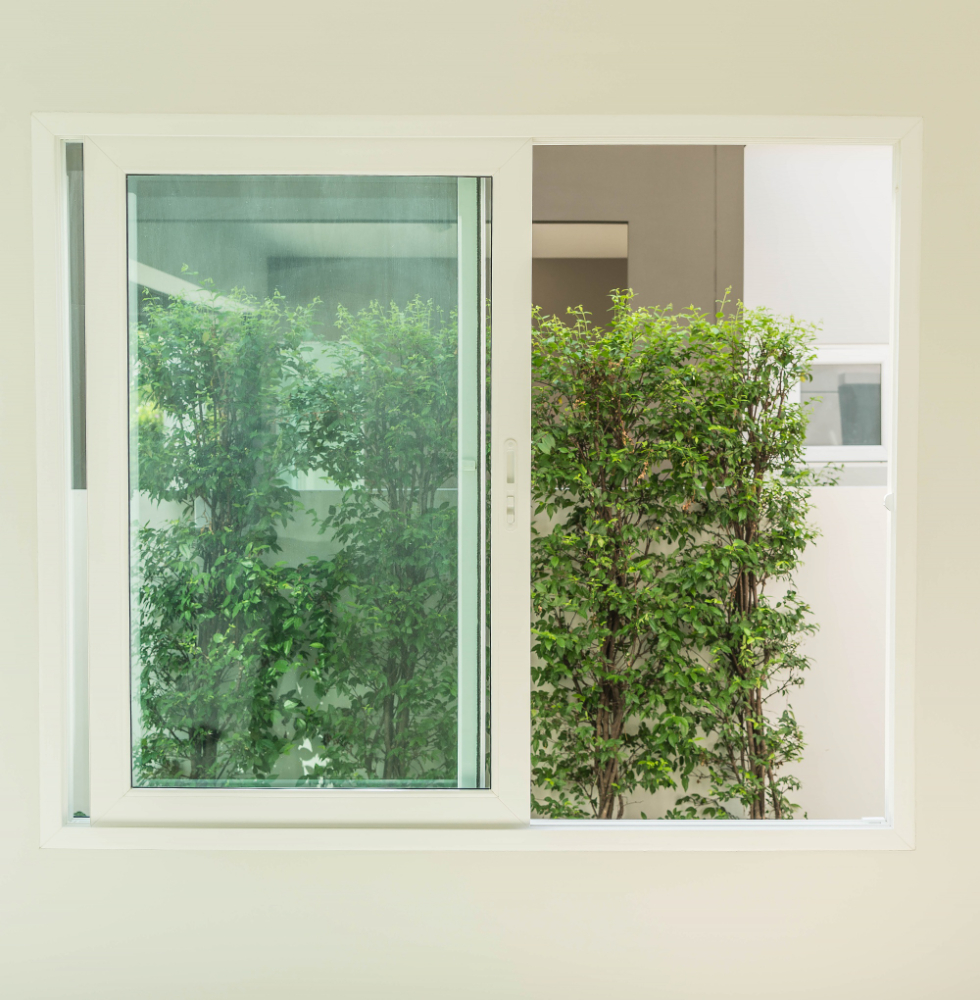
uPVC Sliding
Windows
Smooth to operate and space-saving — no swing radius means they work in tight spaces, narrow kitchens, and balconies. The most popular choice across Indian homes because they’re reliable and intuitive.
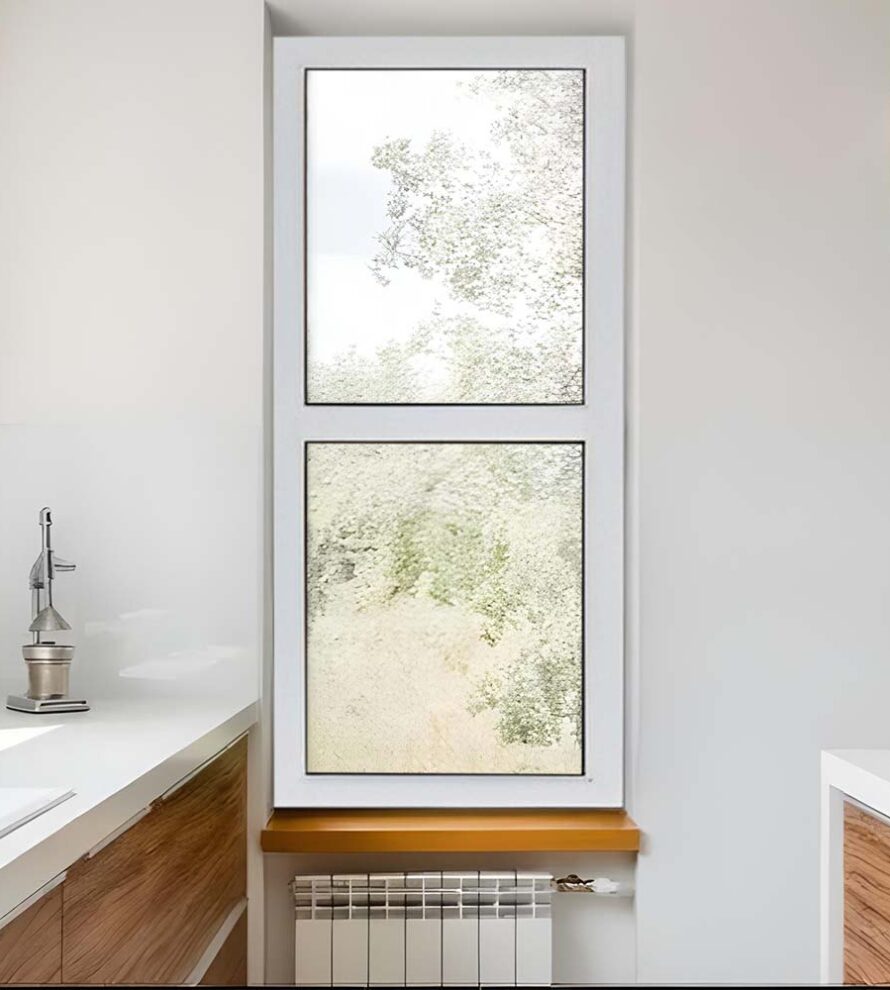
uPVC Fixed
Windows
Maximise light and views without an opening mechanism. Perfect for display areas, staircases, or above doors — wherever you want unbroken glass and peace of mind (nothing to jam or leak).
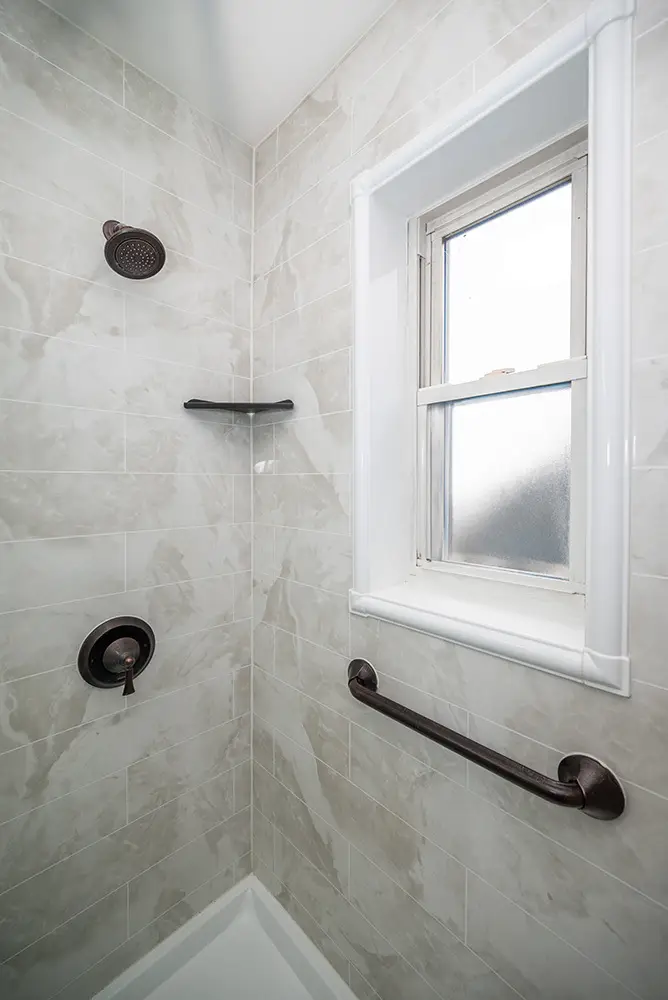
uPVC Bathroom Windows
Privacy is built-in with frosted or textured glass. The frame shrugs off steam and moisture — no mould, no condensation stains. Compact, secure, and maintenance-free for two decades.
The benefits, with numbers
5–7°C
Cooler rooms, lower bills
Insulated glass keeps rooms cooler — which means less AC use and a lighter electricity bill.
–40%
Noise reduction
Sound-damping glass cuts street noise by up to 40%. Sleep better, live quieter.
0 leaks
Monsoon-sealed, season after season
Rubber gaskets and multi-point locks keep driving rain out. No swelling, no jamming, no repainting.
What do uPVC windows cost?
It depends on four things — and we’d rather measure than guess.
Size and design set the base — a large sliding window costs more than a compact bathroom window, and special shapes cost more than standard rectangles. Glass is the biggest variable: single glazing is the budget option, while double glazing (two panes with an insulating air gap between them) costs more upfront but is what delivers the cooler-rooms and quieter-nights numbers above. Hardware — locks, handles, hinges — comes in grades. And site conditions matter: upper floors and old-frame removal add labour.
Because these four factors interact, quoting a number without seeing your home would be a guess — and we don’t guess. What we promise instead: after a free site visit, you get a fixed, itemised quote, window by window. The number we write is the number you pay — no surprises appearing mid-installation.
uPVC or aluminium — which is right for you?
Both are good materials — they’re just good at different jobs. uPVC wins on insulation and value: it doesn’t conduct heat, so rooms stay cooler and quieter, and it needs no repainting — ever. Aluminium wins on slim frames and large spans: if you want floor-to-ceiling glass or ultra-thin sightlines, its strength lets frames almost disappear.
For most homes in North Bengal — where monsoon, humidity and summer heat do the real damage — uPVC is the more comfortable, lower-maintenance choice. But we make both, so our advice isn’t biased toward a material.
Why homeowners in Siliguri choose Sapphire
- Made here, not shipped here
Manufacturing at our own Jalpaiguri factory since 2018 — one of the largest fabrication units in the Siliguri region. Measured, made and installed by the same local team, so service is a phone call away — not an outstation dealer chain.
- A warranty that means what it says
Profiles and joints covered for 20 years; hardware for one year. It’s written into your quote — not mentioned verbally and forgotten.
- Clean, single-visit installation
Most homes are fitted in one visit. We remove old frames, seal the new windows, and leave the room clean — no week-long mess.
- Real projects, nearby
From The Grand Casa Hotel and Hotel Trinity to homes across Salugara and Sevoke Road — our installations are all around Siliguri. Ask us, and we’ll connect you with past customers in your neighbourhood.
Book a free site visit
We’ll measure your openings, recommend the right window types for each room, and leave you with a fixed quote — whether you go ahead or not is entirely up to you. No follow-up pressure; that’s a promise.
FREQUENTLY ASKED QUESTIONs
Common questions
What is uPVC and how is it different from normal PVC?
uPVC is unplasticised polyvinyl chloride — PVC without the softening chemicals. That makes it rigid and strong, unlike the flexible PVC used in pipes and cables. It’s engineered to hold its shape and colour outdoors for decades, resisting sun, rain and humidity without warping or fading.
How long do uPVC windows last?
With normal use, quality uPVC windows last 25–30 years or more. The frames don’t rot, rust or corrode, so ageing mostly shows in hardware, which is easily replaced. We back our profiles and joints with a 20-year warranty, and an occasional wipe-down is all the maintenance they need.
Are uPVC windows good for heavy monsoon and humidity?
Yes — this is exactly where uPVC outperforms wood and metal. The frames absorb no moisture, so they never swell or jam during the rains, and rubber gaskets seal out driving rain. In North Bengal’s months of 80%+ humidity, that means no mould lines, no rot, and no repainting every other year.
How much do uPVC windows cost?
It depends on four things: window size and design, the glass you choose, hardware grade, and site conditions. Because these interact, we quote only after measuring — never over the phone. After a free site visit, you receive a fixed, itemised quote, window by window, with no hidden additions later.
Can uPVC windows have grills fitted?
Yes, and you don’t have to choose between security and looks. We offer slim built-in grills, grills fitted between the glass panes, and traditional SS grills with mosquito mesh — all integrated into the window design rather than welded on afterwards. Every opening style, including sliding windows, can take a grill.
Do uPVC windows really reduce noise?
Yes. The sealed frame stops sound leaking through gaps, and sound-damping glass cuts street noise by up to 40% — enough to turn main-road traffic into background hum. If you live near a busy road or market, ask us about acoustic glass options during your site visit.