uPVC vs aluminium windows — the honest comparison for North Bengal homes
We manufacture and install both materials, so we don’t have a horse in this race — and that’s the only reason you can trust this comparison.
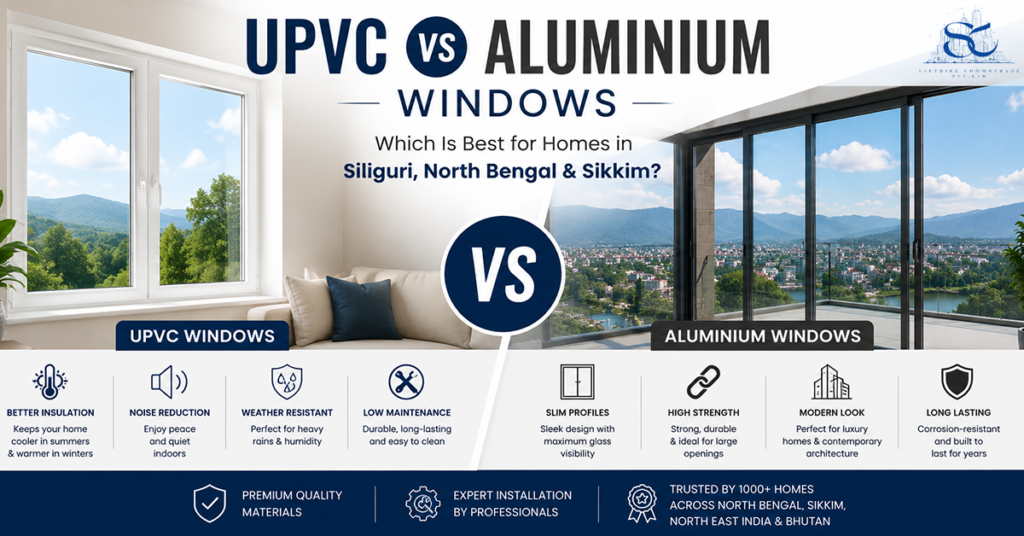
Hundreds of blogs compare these two. Most are written by companies that sell one and quietly hope you pick that one. They’ll praise their material’s strengths, grudgingly admit its weaknesses, and never quite tell you which is actually better for your climate and home. Here’s the short answer: for most homes in North Bengal, uPVC is the more comfortable and practical choice. For others — particularly large openings or ultra-modern design — aluminium is better. And sometimes, the right answer is both: uPVC bedrooms and an aluminium living-room slider.
Below is the full story — how they differ, where each wins, why monsoon and humidity change the game, and how to pick one.
The short answer
uPVC is cheaper, more insulating, quieter, and never needs repainting — it’s the safer choice for most North Bengal homes. Aluminium is stronger, slimmer-framed, and offers modern finishes — it’s the choice for those who want floor-to-ceiling glass and don’t mind the cost.
The quick comparison table:
| Factor | uPVC | Aluminium |
|---|---|---|
| Insulation | Excellent (5–7°C cooler in summer) | Good (but conducts heat; requires thermal break) |
| Noise reduction | Excellent (with sound-damping glass: –40% noise) | Good (not as effective as uPVC + glass) |
| Durability | 25–30 years (no rust, rot, or corrosion) | 30–50 years (requires occasional maintenance) |
| Maintenance | Minimal (wipe down, zero repainting ever) | Annual: clean powder coating, check seals |
| Frame width | Thicker (suits traditional/colonial homes) | Slim (modern minimalist look) |
| Monsoon/humidity | Excellent (no swelling, jamming, or corrosion) | Good (treated properly, but corrosion risk in salt air) |
| Cost (installed) | ₹600–₹900/sq ft (mid-range double-glazed) | ₹750–₹1,150/sq ft (~15–25% more than uPVC) |
| Best for | Bedrooms, living spaces, family living | Large sliders, minimalist design, facades |
Where uPVC wins
Insulation and energy bills
uPVC doesn’t conduct heat, so a room with uPVC windows stays 5–7°C cooler in summer than a room with aluminium windows exposed to the same sun. That sounds small until you realise it’s the difference between running the AC constantly and only in the afternoon.
Less AC use = lighter electricity bills. Over the lifespan of the windows, this adds up. If you spend ₹2,000/month on AC now, uPVC windows can easily cut that by 15–30% — which is ₹300–600 a month, or ₹36,000–72,000 over five years, just in cooling costs. Aluminium windows, by comparison, conduct heat straight through the frame and into the room.
Noise reduction
Sound travels through air gaps and vibrating frames. uPVC is heavier and less acoustically conductive than aluminium, which means:
- A sealed uPVC frame stops more sound leakage than an aluminium frame (same size).
- Pair uPVC with sound-damping glass (two panes with an acoustic interlayer), and you cut street noise by up to 40% — enough to turn traffic into background hum.
If you live on a main road or near a market, this matters. Read how sound-damping glass works.
Monsoon and humidity
This is where the climate of North Bengal makes uPVC the obvious winner.
uPVC: The frames absorb zero moisture. Rain runs off; humidity doesn’t swell them. Winter frost doesn’t make them brittle. Your windows will never jam due to swelling, never need repainting, and won’t grow mould stains even in Siliguri’s 80%+ humidity months.
Aluminium: Treated properly, it resists corrosion — but “treated properly” means annual cleaning, checking seals, and staying vigilant in humid air. Unattended, moisture gets into the powder coating, corrosion starts, and the frame starts to pit. In Sikkim’s high-rain regions or coastal areas (Bhutan isn’t coastal, but the monsoon is heavy), aluminium becomes more maintenance-hungry.
For a monsoon climate, uPVC is genuinely set-it-and-forget-it. Aluminium is not.
Value for money
A quality uPVC window typically costs 15–25% less than an equivalent aluminium window. In India’s 2026 market, uPVC ranges from ₹600–₹900 per sq ft for mid-range double-glazed systems, while comparable aluminium runs ₹750–₹1,150 per sq ft.
Multiply that across a five-bedroom home (let’s say 20–30 windows totalling 200–250 sq ft of glazing), and you’re looking at ₹30,000–₹62,500 in savings upfront. That money can go into double glazing for better insulation, acoustic glass for noise reduction, or security grills — all things that improve comfort. Or you just spend less.
For most homeowners, especially in budget-conscious North Bengal, that difference is real.
Where aluminium wins
Slim frames and large spans
Aluminium is stronger than uPVC at the same thickness, so manufacturers can make frames much narrower without sacrificing strength.
A large sliding window in uPVC might have a visible frame width of 80–90mm. The same window in aluminium could be 40–50mm, giving you more glass and a more modern look.
If you want a floor-to-ceiling slider or a entire wall of glass, aluminium makes that possible. uPVC can do it, but the frames will be more prominent.
The catch: if a slim, modern frame is your priority, you lose the insulation and monsoon benefits above. You’re trading comfort for aesthetics.
Colour and finish range
uPVC comes in white, white-with-woodgrain (to look wooden), and a handful of other colours — the options are limited because the material’s colour is baked in during manufacturing.
Aluminium gets powder-coated in any colour you want: black, forest green, charcoal, custom RAL shades. If your home’s design calls for a specific colour, aluminium is the flexible choice.
Large commercial spans
For architectural facades, floor-to-ceiling shopfronts, or large structural glazing systems, aluminium is the material of choice. uPVC simply isn’t designed for those scales. We make aluminium facades for commercial projects; uPVC is for residential windows.
What about our climate? The North Bengal & hill-station angle
This is the section no national competitor has — and it’s why you should read a local comparison, not a generic blog.
Monsoon and sealing
uPVC: Doesn’t swell, doesn’t corrode, doesn’t need maintenance. A properly sealed uPVC window keeps driving rain out, month after month of downpour. No mould, no staining, no rot in the wooden sill behind it.
Aluminium: Sealing is critical. If the rubber gaskets degrade or the frame seal fails, water gets in. Once water sits in the aluminium cavity, corrosion starts. You’ll see white powdery deposits (oxide) forming on the frame. Preventable with maintenance, but maintenance is required.
Winner for Siliguri monsoon: uPVC, decisively.
Hill-station temperature swings
Darjeeling, Kalimpong, and Gangtok see wild swings — hot afternoons, cold mornings, frost at night. Thermal stress.
uPVC: Expands and contracts with temperature, but within its design range. Quality uPVC windows are rated for this; the gaskets flex, the frame stays functional.
Aluminium: Also expands and contracts, but differently — the frame and the glass expand at different rates. Over years of Darjeeling winters, micro-stress at the glass-to-frame joint can appear as hairline cracks. Again, not inevitable, but a known risk in extreme-temperature climates.
Winner: uPVC, for the predictable, forgiving expansion properties.
Humidity and dust
North Bengal’s humidity is 70–80% most of the year. Dust from roads, construction sites, and market traffic settles on windows.
uPVC: Dust wipes off, never stains the frame itself, no oxidation to worry about.
Aluminium: Dust + humidity + time = the oxide buildup mentioned above. It’s cosmetic at first, then it spreads if ignored.
Winner for zero-maintenance living: uPVC.
Honest note: if you maintain an aluminium window (annual wash, seal checks), it performs fine in this climate. But “if you maintain it” is the key phrase. uPVC doesn’t require that.
Cost comparison — realistic ranges
uPVC windows, installed:
- Budget (single-glazed): ₹450–₹600 per sq ft
- Mid-range (double-glazed): ₹600–₹900 per sq ft — this is the most common choice for North Bengal homes
- Premium (acoustic glass, custom finishes): ₹900–₹1,200 per sq ft
Aluminium windows, installed:
- Budget: ₹550–₹750 per sq ft
- Mid-range: ₹750–₹1,150 per sq ft
- Premium system windows: ₹1,200–₹1,600+ per sq ft
The cost difference: For equivalent mid-range systems, aluminium typically costs 15–25% more than uPVC. In premium configurations — thermal break aluminium or acoustic systems — the difference can reach 30–40%.
What moves the price for both:
- Glass: double glazing (two panes with an insulating air gap) costs more than single glazing but saves money on AC and heating over 3–5 years through improved insulation. This is the biggest cost variable.
- Size: a 2×3 metre opening costs more than a 1×1 metre opening just by volume of material. Larger projects benefit from volume discounts; per-sq-ft cost slightly decreases.
- Design complexity: a simple rectangle costs less than a circular window, curved top, or custom shapes. Special designs require custom fabrication.
- Hardware grade: budget handles and basic locks cost less than multi-point security systems or premium hardware. For security grills or advanced ventilation, hardware price goes up.
- Site conditions: if your existing window frames are steel or heavy wood, removal labour is higher. Upper-floor installations may need scaffolding or safety measures, adding ₹50–₹150 per sq ft to labour costs.
The fixed-quote promise: After a free site visit, you’ll receive a detailed, itemised quote — cost per window, broken down by size, glass, and hardware. The number we write is what you pay. No surprises during installation.
So which should you choose?
Choose uPVC if…
- You value comfort and low electricity bills (the 5–7°C cooler rooms really matter in your daily life)
- You live on a busy road and want quiet inside
- You’re in a monsoon-heavy area (Siliguri, Sikkim) and want zero maintenance
- You’re budget-conscious and want the best ROI
- You have a traditional or colonial-style home where thicker frames match the aesthetics
- You plan to stay in the home for 10+ years and want to “set and forget”
This is the majority of homes we work on in North Bengal.
Choose aluminium if…
- You want a modern, minimalist look with slim frames and maximum glass
- You’re planning large sliders or floor-to-ceiling glazing
- A specific colour (not white) is critical to your design
- You’re willing to do annual maintenance (cleaning, seal checks) in exchange for that aesthetic
- You have a contemporary home and the thick uPVC frame feels out of place
This is the second-choice option for us — still excellent, still durable, but requires more vigilance in this climate.
Mix both (it’s common and it works)
- Typical arrangement: uPVC in bedrooms and living areas (comfort + quiet), aluminium in the living-room slider or study (aesthetics + light).
- Why it works: different rooms have different priorities. Bedrooms prioritise sleep and comfort; living areas prioritise light and views.
- The cost: you get the best of both worlds for only a ~10% premium over all-uPVC.
FREQUENTLY ASKED QUESTIONS
FAQ SECTION
Which is cheaper — uPVC or aluminium windows?
uPVC is typically 15–25% less expensive than aluminium for an equivalent window. Over a whole-home project, that can be significant. However, both materials deliver ROI through insulation savings and durability, so the cheaper option isn’t always the best choice if your priorities are different.
Which lasts longer?
With normal maintenance, uPVC lasts 25–30 years and aluminium lasts 30–50 years. In practice, the difference is academic — most homes are renovated or re-windowed before either material fails. The question isn’t “which lasts longer,” it’s “which one does your climate suit” — and in North Bengal’s monsoon, uPVC is more forgiving.
Which is better for noise reduction?
uPVC, especially paired with sound-damping glass (acoustic interlayer). A sealed uPVC frame + acoustic glass can reduce street noise by up to 40%. Aluminium is good, but not as effective. If quiet is a priority (main-road home, market-adjacent building), start with uPVC.
Are aluminium windows stronger than uPVC?
Yes, structurally — aluminium is more rigid at the same frame thickness. That’s why aluminium frames can be slimmer. However, both materials are engineered for residential windows, and both are strong enough. The question is rarely about strength; it’s about aesthetics (slim vs substantial) and climate resilience.
Which is better for coastal or humid climates?
uPVC is better for humid, monsoon climates like North Bengal, Sikkim, and Bhutan. It doesn’t corrode, doesn’t absorb moisture, and never needs repainting — genuinely set-it-and-forget-it. Aluminium needs annual maintenance in high-humidity areas to prevent oxide buildup. Coastal salt air is hard on both, but uPVC is more forgiving.
Can I mix uPVC and aluminium in one home?
Absolutely, and it’s common. Many homeowners use uPVC in bedrooms and living areas (comfort, quiet, low maintenance) and aluminium in the living-room slider or study (modern look, light). It works beautifully and costs only ~10% more than all-uPVC.